Scroll below for almond butter recipe!
In recent years, almond butter has seemed to be considered the "healthier" nut butter among many health-conscious eaters as they look upon peanut butter as its low-brow relative. If you've ever tried it before, there's a strong chance you've found almond butter to be a tasty alternative to peanut butter, but is it really worth nearly twice as much as peanut butter at the check out line for it's health benefits?
Firstly, almond and peanut butters are nearly the same when it comes down to macronutrients with about 8g of fat, 3g of carbs, and 3.5g of protein per 100 calorie tablespoon serving. The fat in both butters is unsaturated, which is heart-healthy. Within the nitty gritty micronutrients is where we begin to see some emerging differences between the butters. Almond butter has almost 3 times as much vitamin E and twice as much magnesium as its peanut counterpart, two very important micronutrients. Vitamin E is an antioxidant not found in a wide variety of foods that helps your body fight damage to cell membranes by free radicals. Magnesium is important for bone health and your central nervous system, both of which are essential to a regular resistance training program. Almond butter has also been found to have about seven times as much calcium and twice as much iron than peanut butter. Calcium strengthens bones and teeth, aids weight loss, prevents PMS, benefits heart health in moderation and may even fight cancer. Iron boosts immune function and helps prevent fatigue.
Due to the amount of processing involved with peanut manufacturing in America, it's your best bet to pick up some organic peanut goodness over the conventionally processed alternative to avoid any residual pesticides in the latter.
I have personally seen great results with almond butter with their clients when it comes to weight loss. I've heard many clients report that almonds seem to be more filling and find it more difficult to put the peanut butter away after just 1 tablespoon. Peanuts are technically a legume, not a nut, which may lead to increased bloating due to their complex structure of starch and protein. It's also worth noting that legumes are a Paleo no-no.
The verdict? As long as you don't have any nut allergies, or are following a Paleo diet, both in moderation. Switch it up. I try to be as creative as I can in my meal plans within a larger, more rigid framework, so anytime you can play around with different types of good food, I encourage it. I help get my clients in somewhat of a routine when it comes to their food; eating right is a lifestyle change, and having some consistency can go a long way to ensuring you stay on track with your eating goals.
Ready to make your own almond butter? HERE'S HOW!!
Ingredient: Almonds (raw, unsalted), 3 cups
Equipment: high-powered blender or food processor.
High Powered Blender instructions:
- Pour 3 cups of almonds into your blender.
- Turn on and slowly increase the power from 1 to 10.
- Switch to high. Use tamper to constantly press almonds and then the almond powder back into the blade for about 1 minute until it looks like, well, nut butter.
- Scoop out of blender and store in a air tight container, glass preferable.
Food Processor Instructions:
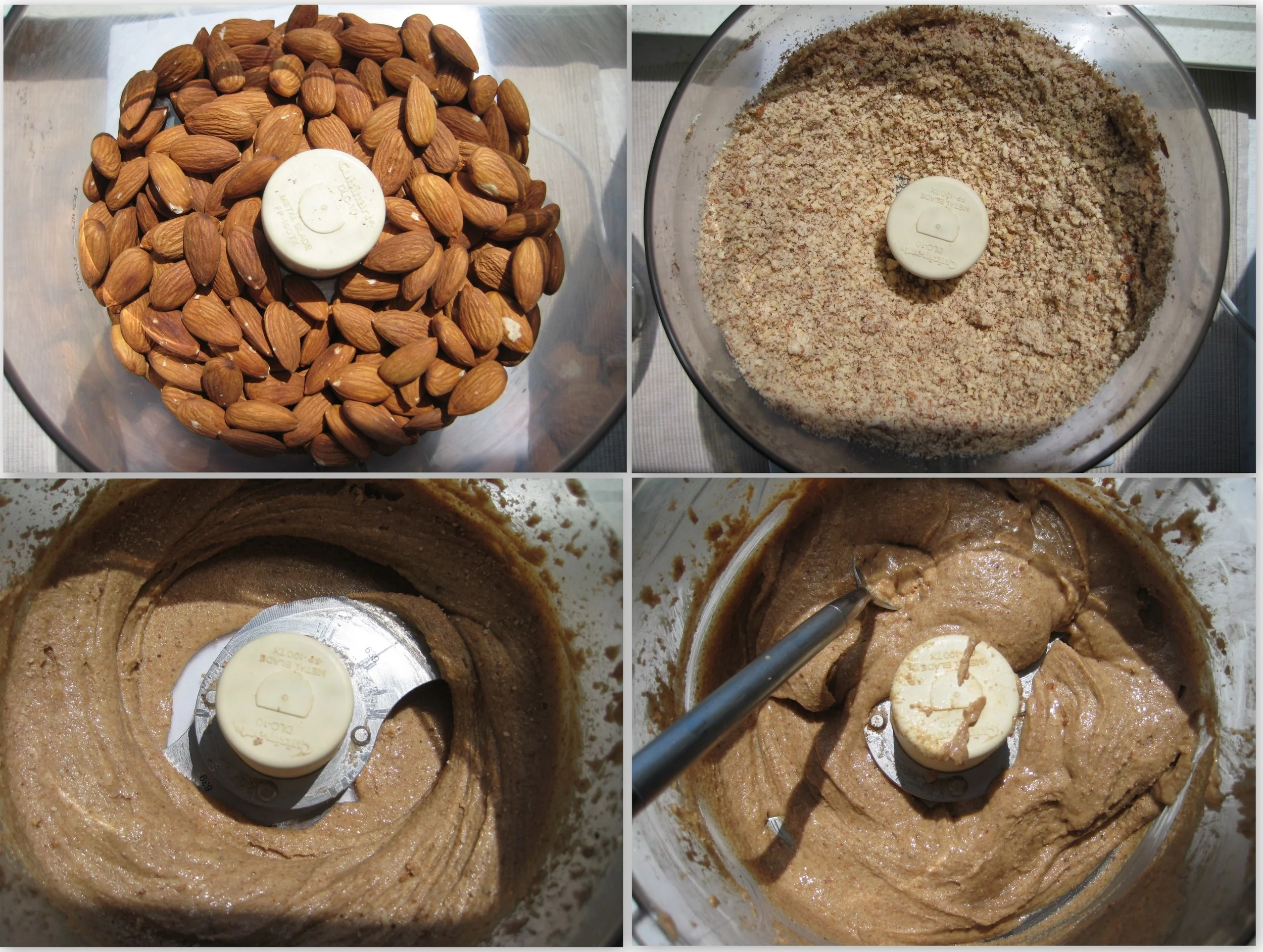
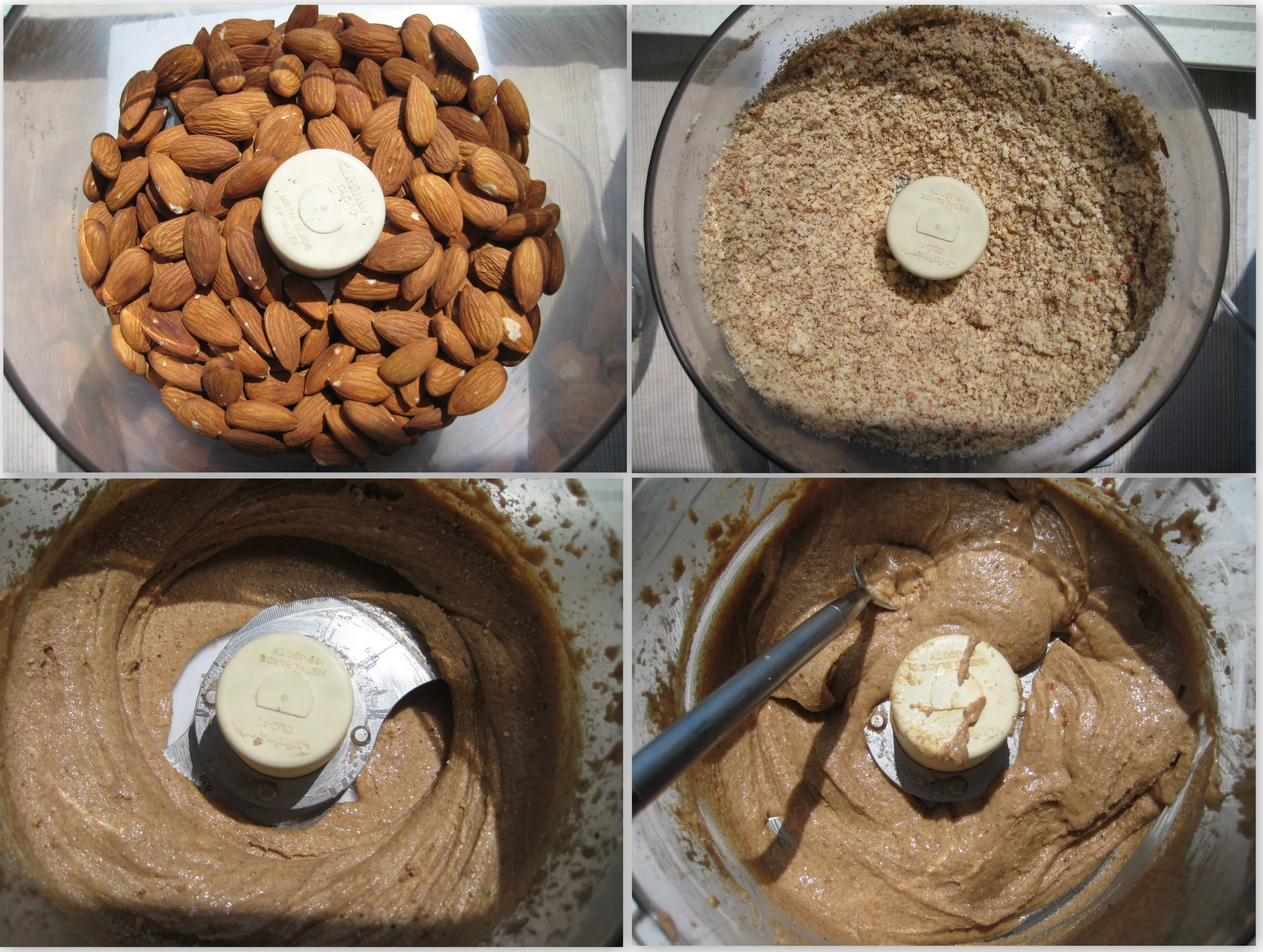
- Get a spatula. Pout the almonds into the food processor and let it grind the almonds into dust. Keep pushing the dust back into the blade. Turn it off to do so.
- Repeat this process. Be patient, it will start to clump first and then it will start to get creamy. Presto! Almond butter. Store in an air tight container.
I suggest storing in a glass container like a Ball jar. They are air tight and glass won’t leak nasty plastic into your beautiful raw concoction like Tupperware will.
Try a healthy version of the PB&J by making a sandwich with your new almond butter and fresh strawberries!
Enjoy!
Have a question? Need help? Drop me a line. Have an alternate solution? Please share. Let us all benefit from your brilliance. Thanks!
Recipe collected from http://napsandroadmaps.com/